Pilgrimage to St. Catherine’s Monastery


Background Information

Okay, so maybe this wasn’t a pilgrimage for us, but it was a pretty incredible site to visit. According to the Bible, Moses received the Ten Commandments from God at this sight.  The monastery was built by order of Emperor Justinian I (525-565), enclosing the Chapel of the Burning Bush ordered to be built by Helena, the mother of Constantine, at the site where Moses is supposed to have seen the burning bush (the living bush on the grounds is purportedly the original). This sight is said to be one of two of the oldest working Christian monasteries in the world (the other one, the monastery of St. Anthony, south of Cairo, is also on my list of places to visit).

Though this place is commonly known as Saint Catherine’s, the full, official name of the monastery is The Sacred and Imperial Monastery of the God-Trodden Mount of Sinai, and the patronal feast of the monastery is the Trasnfiguration. The site was associated with St. Catherine of Alexandria, a Christian martyr sentenced to death on the wheel. When this failed to kill her, she was beheaded. As the story goes, angels took her remains to Mount Sinai and around the year 800, monks from the Sinai Monastery found her remains on the top of Mt. Sinai and brought them into the chapel (you can see her coffin and a hand bone in a reliquary in the chapel).

A Fatimid mosque was built within the walls of the monastery, but it has never been used since it is not correctly oriented towards Mecca (you can still see the minaret next to the bell tower).

During the seventh century, the isolated Christian anchorites of the Sinai were eliminated: only the fortified monastery remained. The monastery is still surrounded by the massive fortifications that have preserved it. Until the twentieth century, access was through a door high in the outer walls (there’s a picture of it below). From the time of the First Crusade, the presence of Crusaders in the Sinai until 1270 spurred the interest of European Christians and increased the number of intrepid pilgrims who visited the monastery. The monastery was supported by its dependencies in Egypt, Palestine, Syria, Crete, Cyprus and Constantinople.

Getting There

We were picked up again by the tour company very early in the morning. It takes about 3 hours to get to the city of St. Catherine’s and then about twenty more minutes to walk to the site. En route, we stopped for coffee and snacks at a roadside stand (thank God because we missed breakfast because it was so early and I was afraid that someone was going to get hangry again). Along the road, the landscape changed from barren looking desert to craggy mountains, similar to the Grand Canyon. There were lots of Bedouin camps in the middle of the inhospitable landscape too. Our guide was telling us the Bedouin’s don’t bury their animals remains, so there were lots of dead camels lying along the roadside.
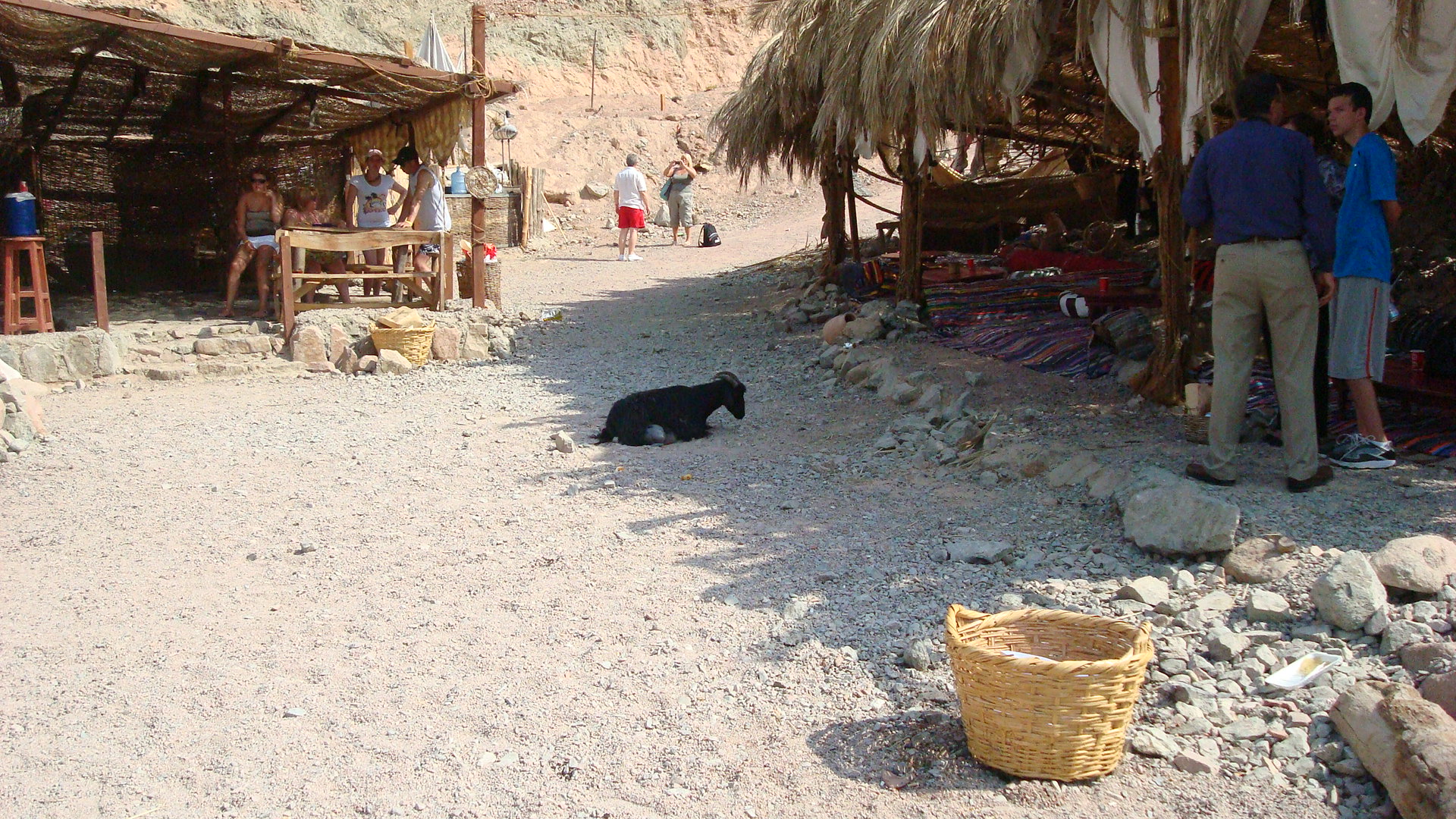
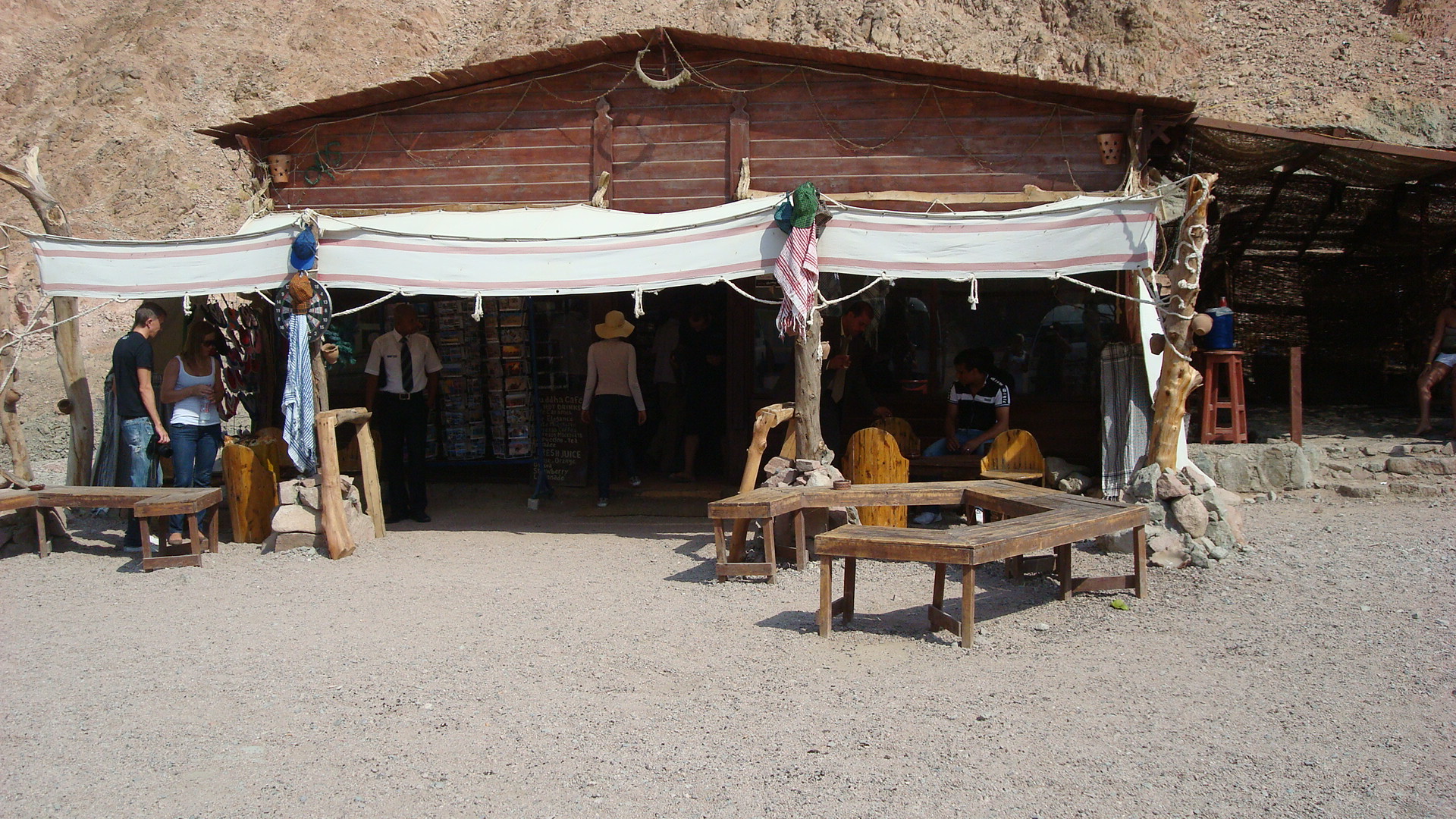
Coffee and Snack Stop
The coffee stop

The Pit

After what seemed like forever getting to the monastery, we parked in a parking lot and were led up a slight incline to the monastery’s entrance. Of course I was dressed inappropriately (as Raj always likes to point out) and was asked to place a scarf around my scantily clad legs. Our guide had forewarned us that there was no talking and no taking pictures inside the chapel. As we entered, it was dimly lit (to protect the icons) but it was extremely difficult to see them. We were given about five minutes to look around and then we were hurried out by the priests. As we exited, the burning bush was to our right. Even more exciting to me at this point on the trip was the WC (wash closet or bathroom) that I saw off in the distance (keep in mind the drive was over three hours long). I excused myself to visit the ‘facilities,’ but couldn’t go. It was a pit toilet. As much as I had to go, I couldn’t. I exited the bathroom telling myself I could hold it (but for how long?). This lasted about two minutes and then I resigned myself to try again. I walked back in, started dismantling my skirt-scarf, which I might add fell off and onto the the WET floor. (OMG, what was the wetness???). As I walked out again, I mentioned that the floor was WET to the woman in line behind me. She said it was just water from the hose. I went back in and there was NO HOSE…Yep, you know what it was and it was now on my scarf and I had to put the scarf back on my legs to cover them up. I went back in for a third time ready to get it over with when a woman from our group (a saint, really) came running in to tell me that the guide said our lunch place had a REAL toilet. I could hold for an hour knowing this and so I wrapped my pee scarf back on and headed out. Twenty minutes later, we were eating lunch in a restaurant and all was well.

The Bell tower
Not happy about the scarf

Heading Back

On the way back towards Sharm el-Sheikh, we made one last stop in the coastal town of Dahab. We stopped at a jewelry store, made a couple of fabulous birthday purchases, and then walked along a promenade of shops. We were dropped off in the early evening, again exhausted from not much except sitting in a van all day. Next time we plan on doing the “Mt. Moses” tour (you’re picked up by the tour company at 10:00pm, brought to the base of the mountain (at St. Catherine’s), you climb for three hours, watch the sunrise (there are three coffee shops at the top of the mountain), then you walk down after sunrise and are driven back). We got back to our room and I was surprised to find a birthday cake waiting for me.

This slideshow requires JavaScript.

Snorkeling in Sharm el-Sheikh


Raj and I took off to Sharm el-Sheikh, Egypt, for my birthday this past weekend. Unlike ALL of the other trips I’ve ever planned, this trip was booked through a travel agent–yes, they still have them here and to get any type of deal, you have to use one. We booked the trip a few weeks ago, shortly after I arrived, at a local travel agency in a nearby mall. Normally, I’m our travel agent, scouring through multiple travel guides, seeking out TripAdvisor ratings and points of interest, so this was all very new and scary to me–to leave our vacation in the hands of an agent–the only agent at the travel agency who spoke English. The agent handed us a leaflet of options, most of the writing was in Arabic, so all I could read were the names of the hotels, and with the exception of Marriott and Hilton, the rest were unfamiliar. We chose the Marriott, but they were booked. Next down the list was Sonesta. I’ve never heard of it, but it was similarly priced to the Marriott, so I figured it would be comparable. We paid for the trip: airfare, transfers, hotel, taxes, etc. in full and were told to come back to pick up the tickets three days before the trip. Fast forward to three days before the trip: Raj goes to pick up the tickets and is told to come back the day before the flight. Raj was busy working the day before the flight so I was the lucky one who got to go back and pick up the tickets. Much to our relief, we were given confirmation and were all set to go.

The flight was uneventful. We arrived on time and were directed by representatives of the travel agency to board a bus that would drop us off at the hotel (apparently, EVERYONE uses this same travel agency, so they all knew what to do). We arrived at the hotel and it looked nothing like the pictures. I’m sure my face said it all because the front desk clerk was very concerned that I was not happy. We were shown to our room, which was quite lovely, and then I got over it. We settled in, booked a couple of outings for snorkeling and St. Catherine’s monastery, and then relaxed by the pool.

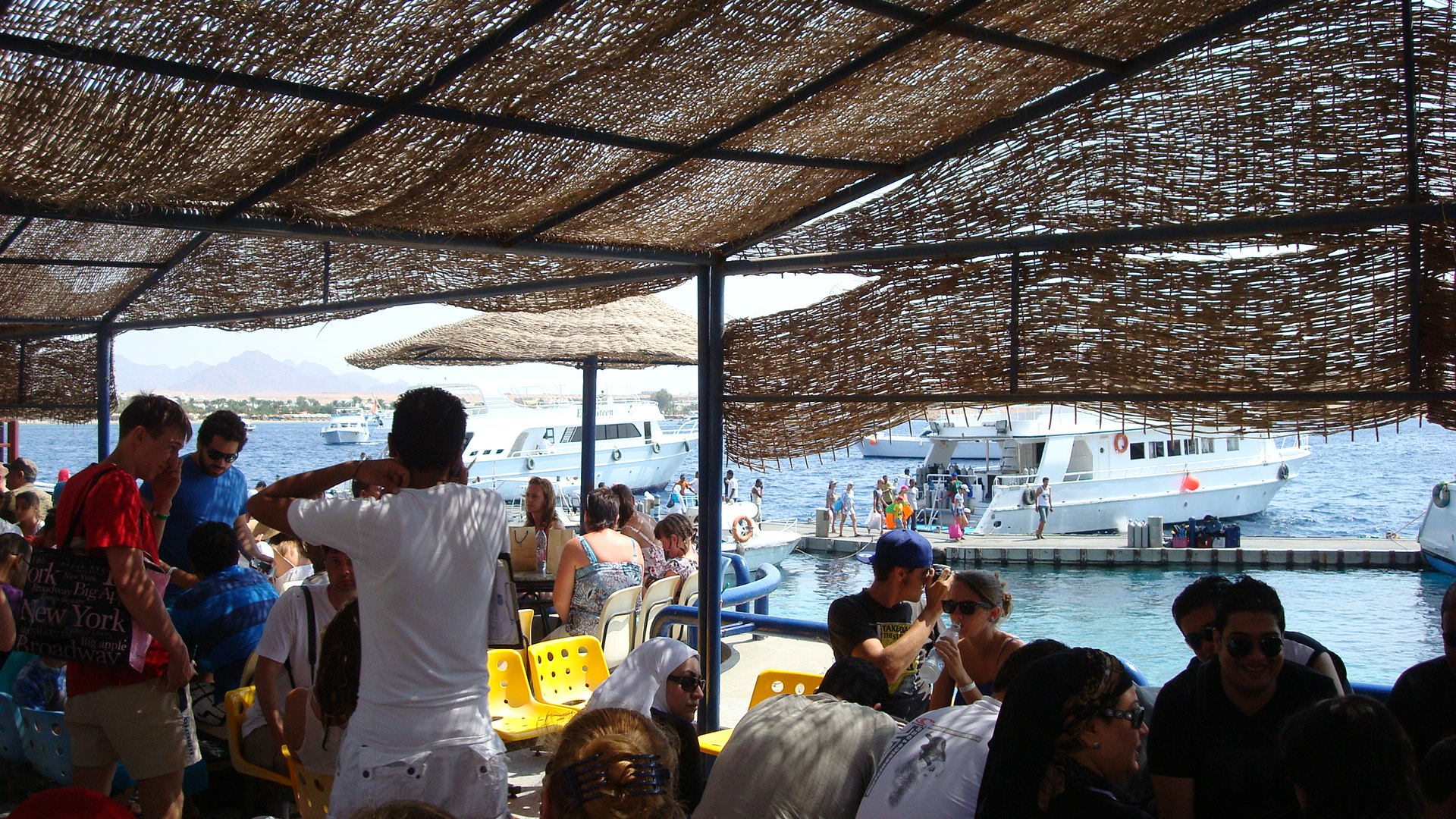
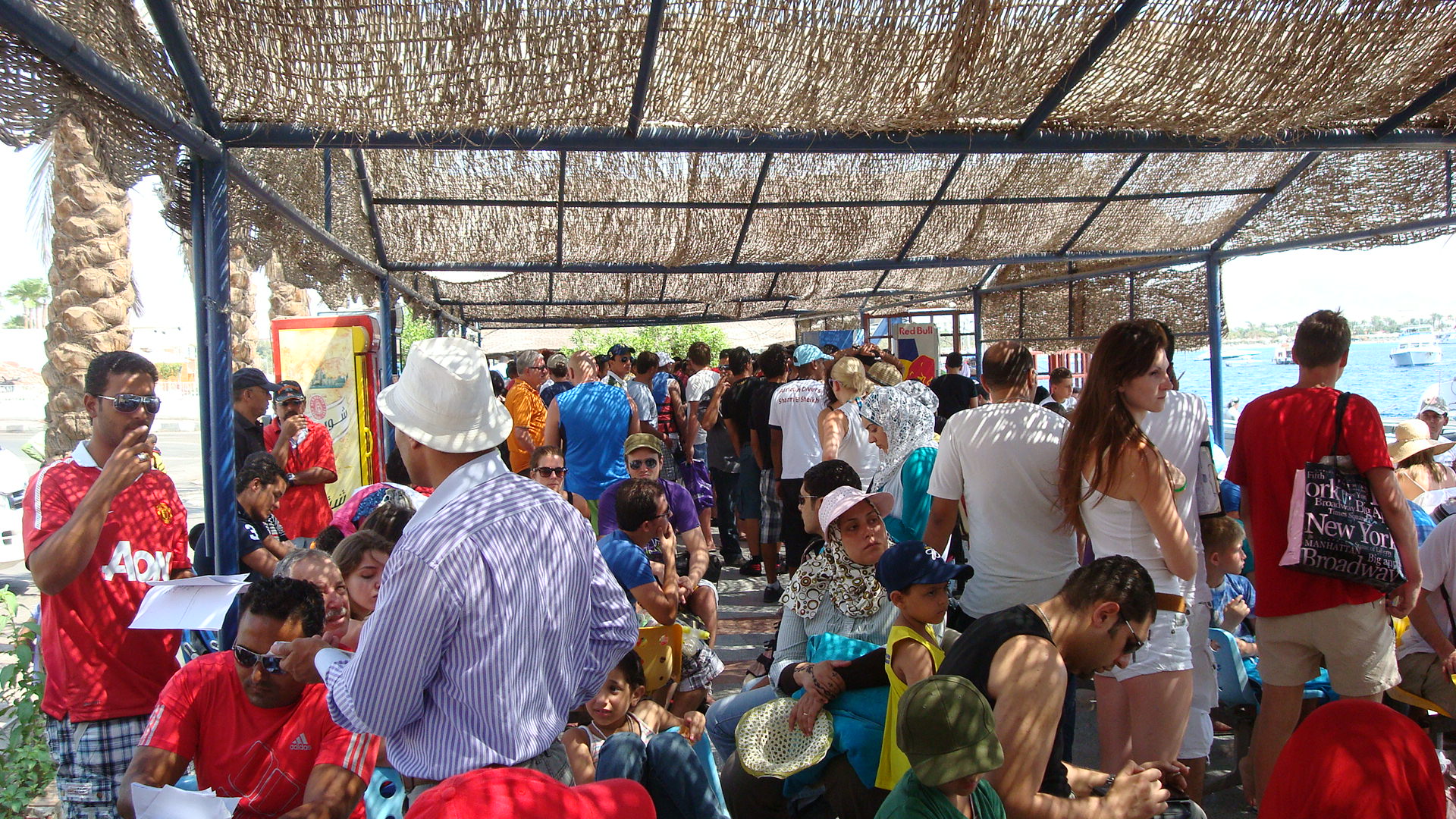
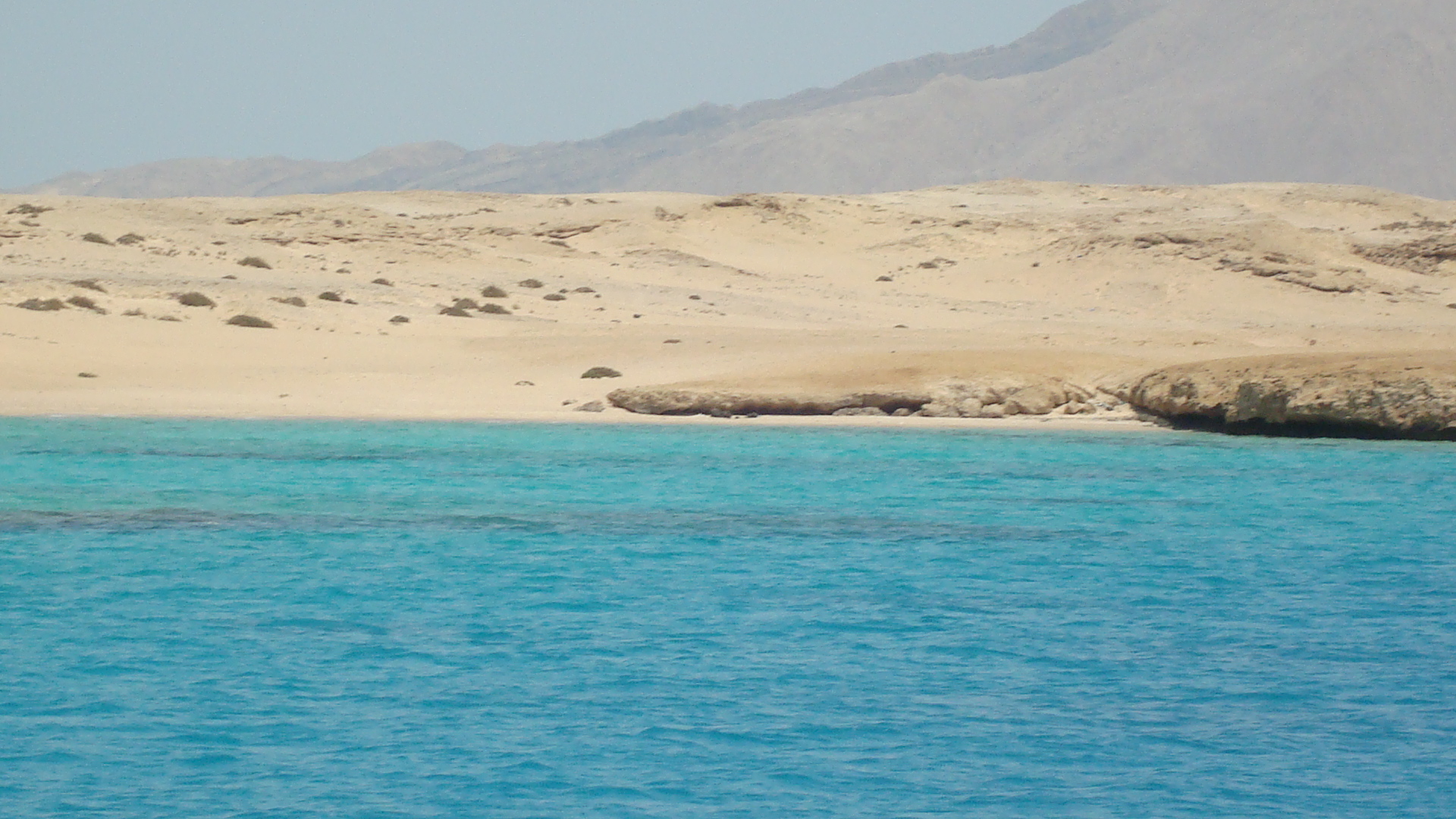
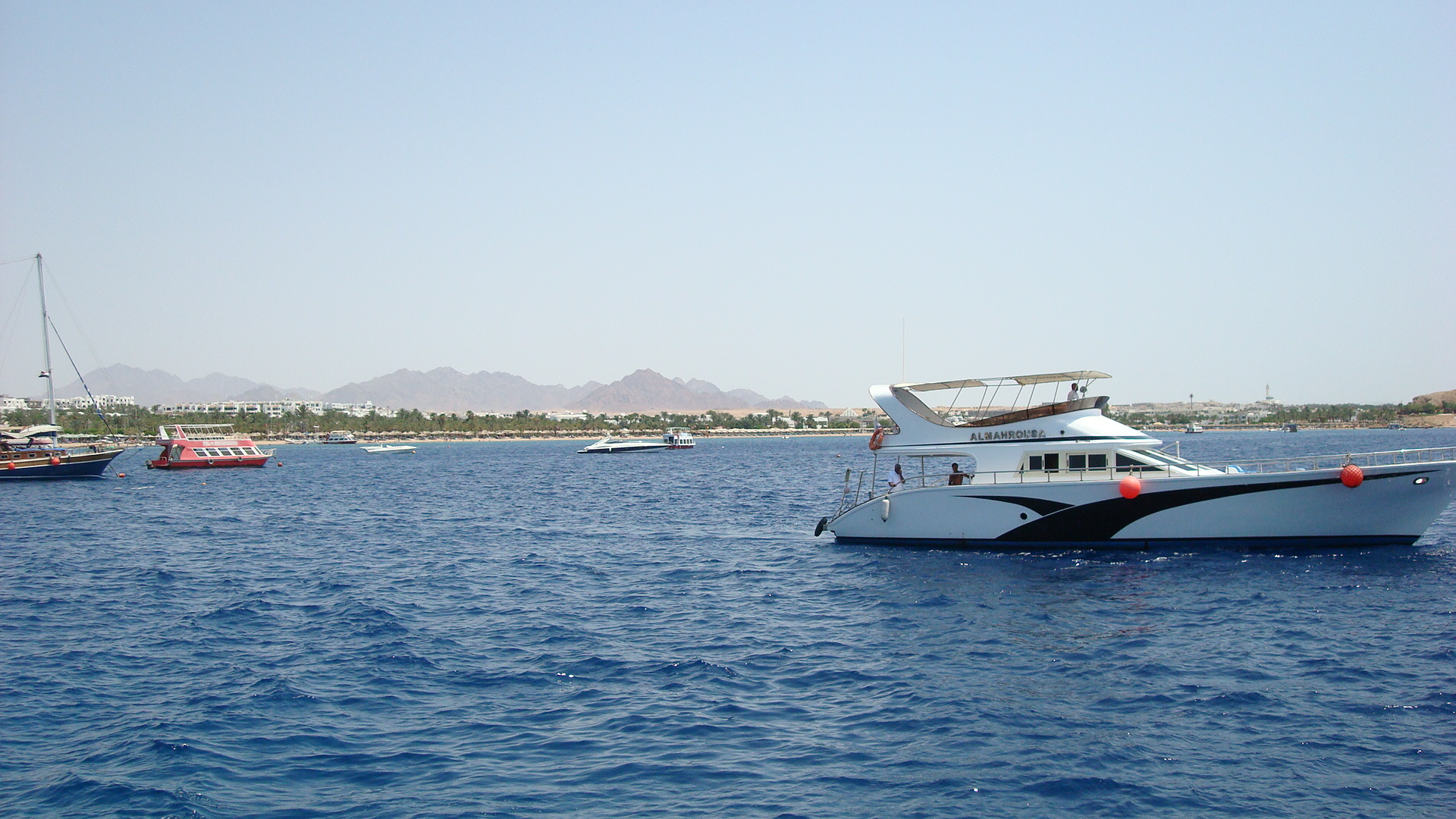
We scheduled a snorkeling trip for Friday. We were picked up at our hotel by the tour company and whisked off to Naama Bay. We didn’t bring any of our equipment and had to rent it at the dock. As you can see in the pictures, this place was a mess. Throngs of people were waiting alongside of us to get onto their boat. It was a strange mix of people too: scantily clad Europeans next to fully covered women and children.


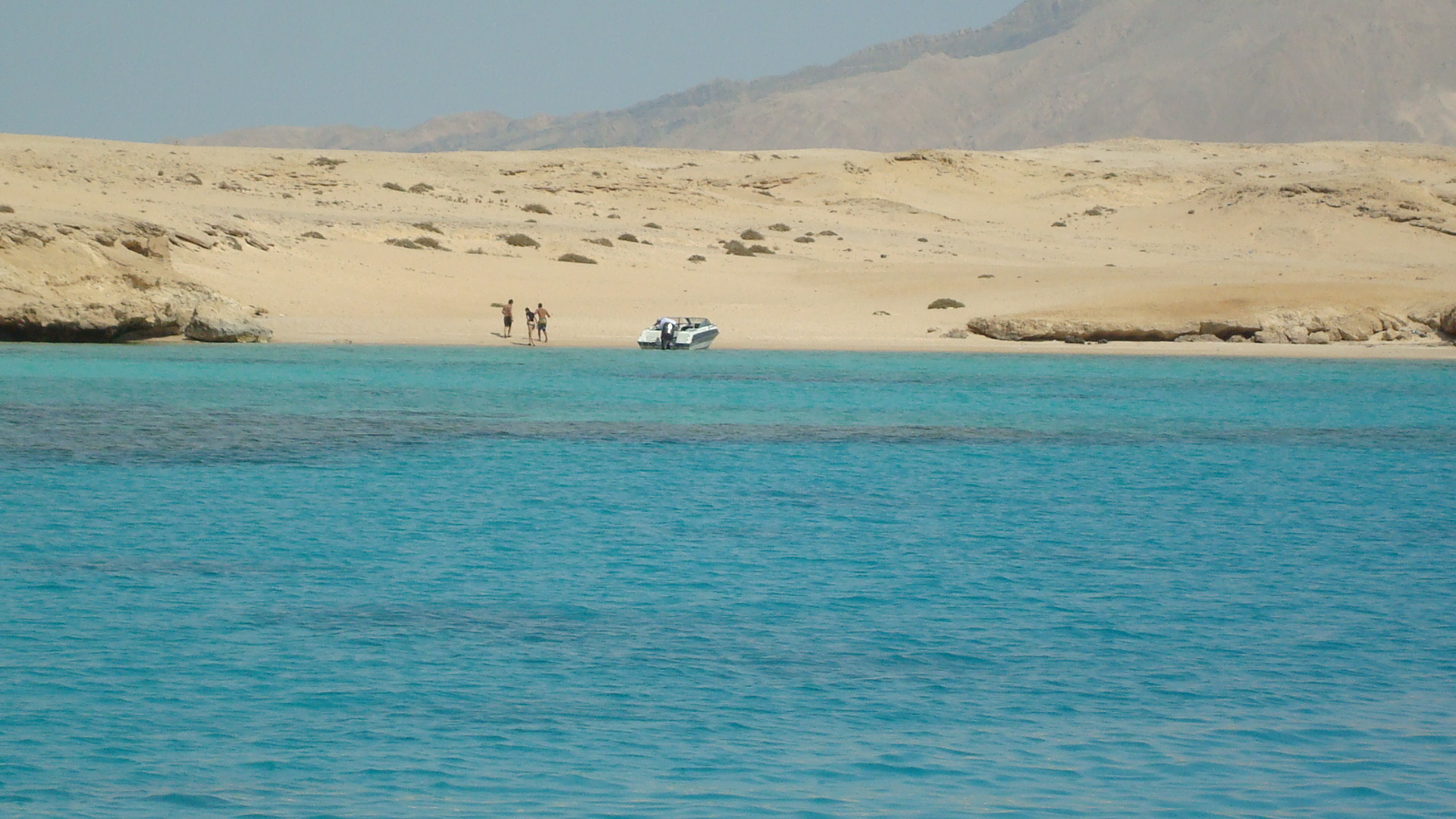
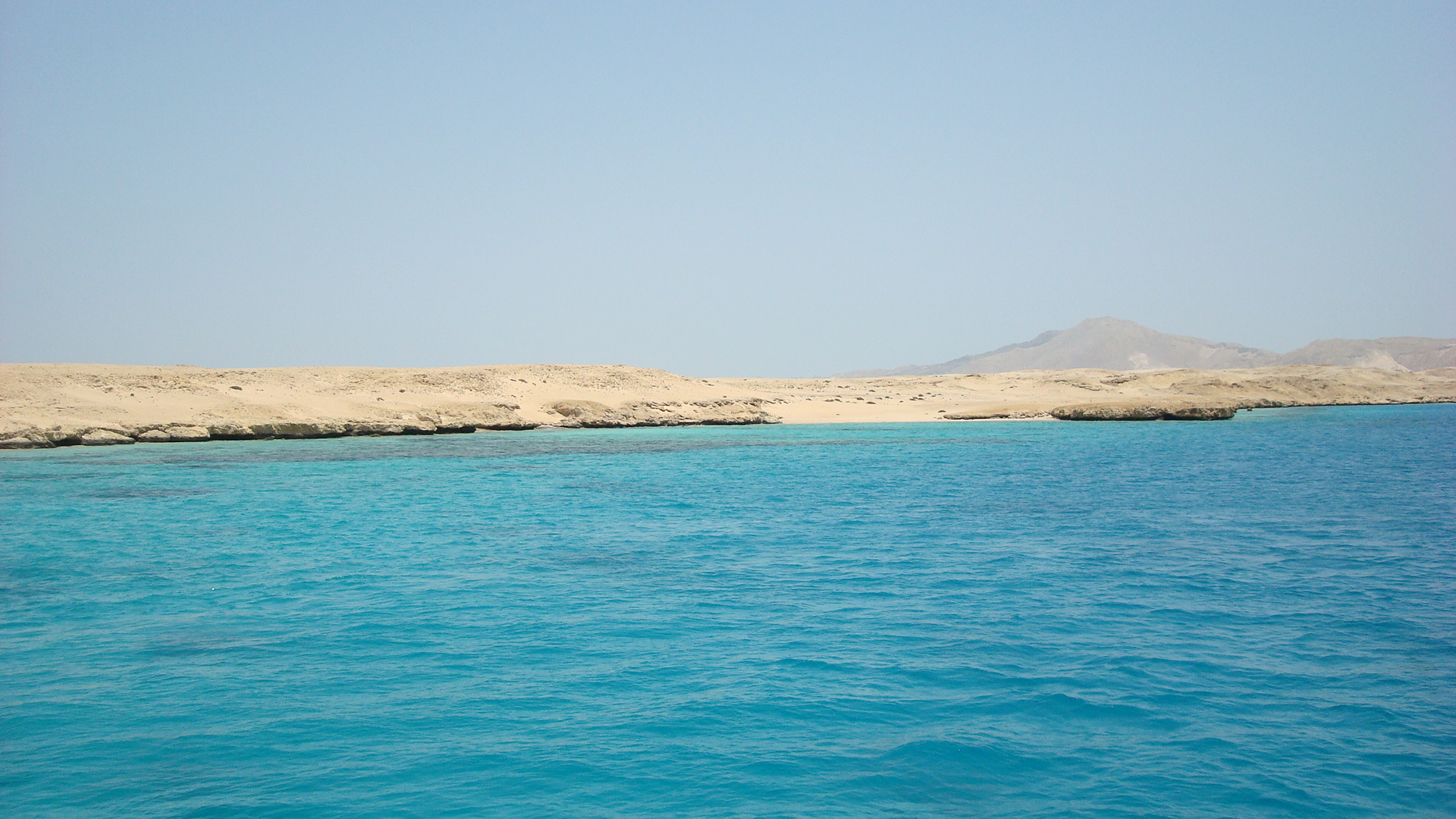
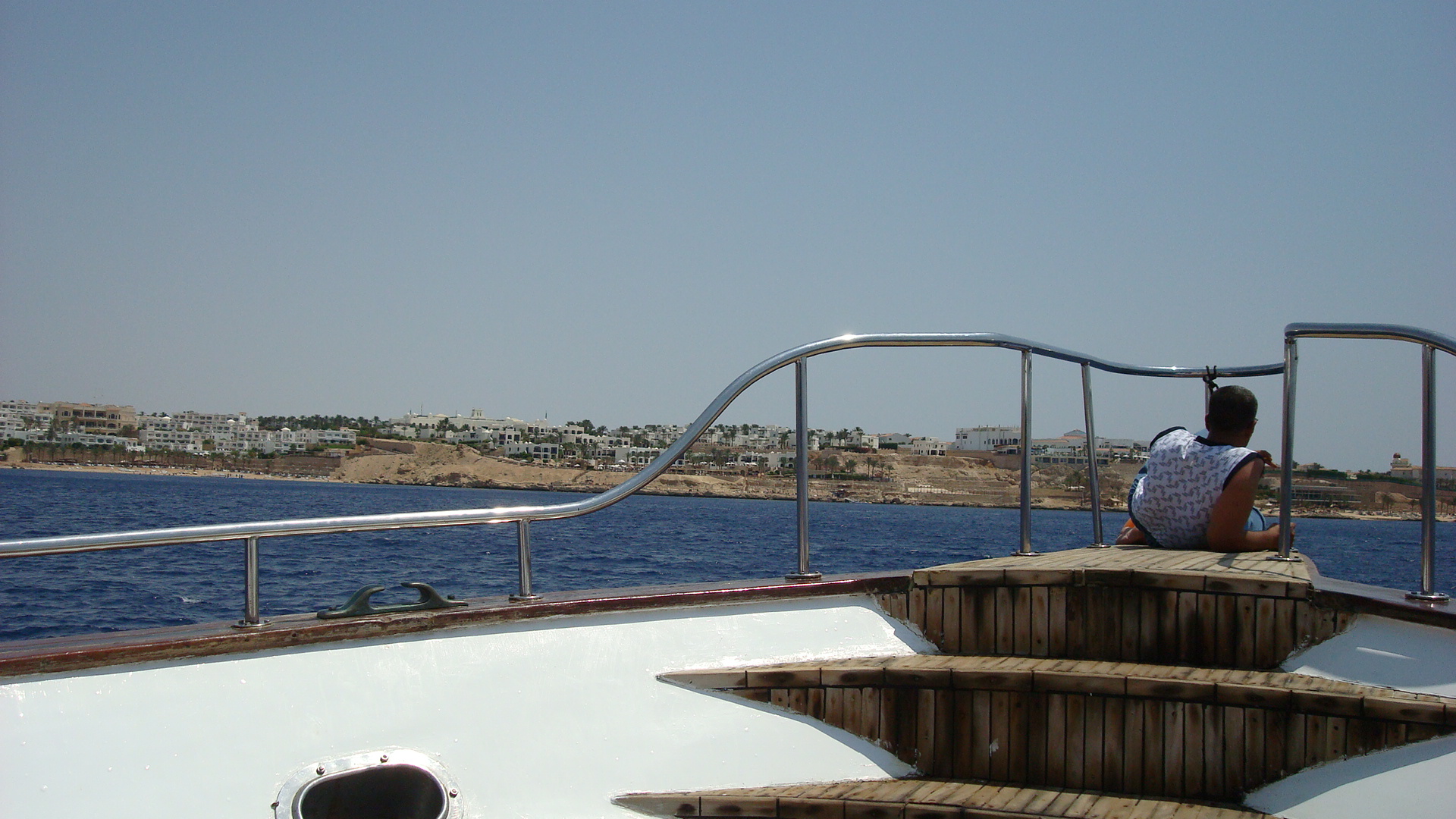
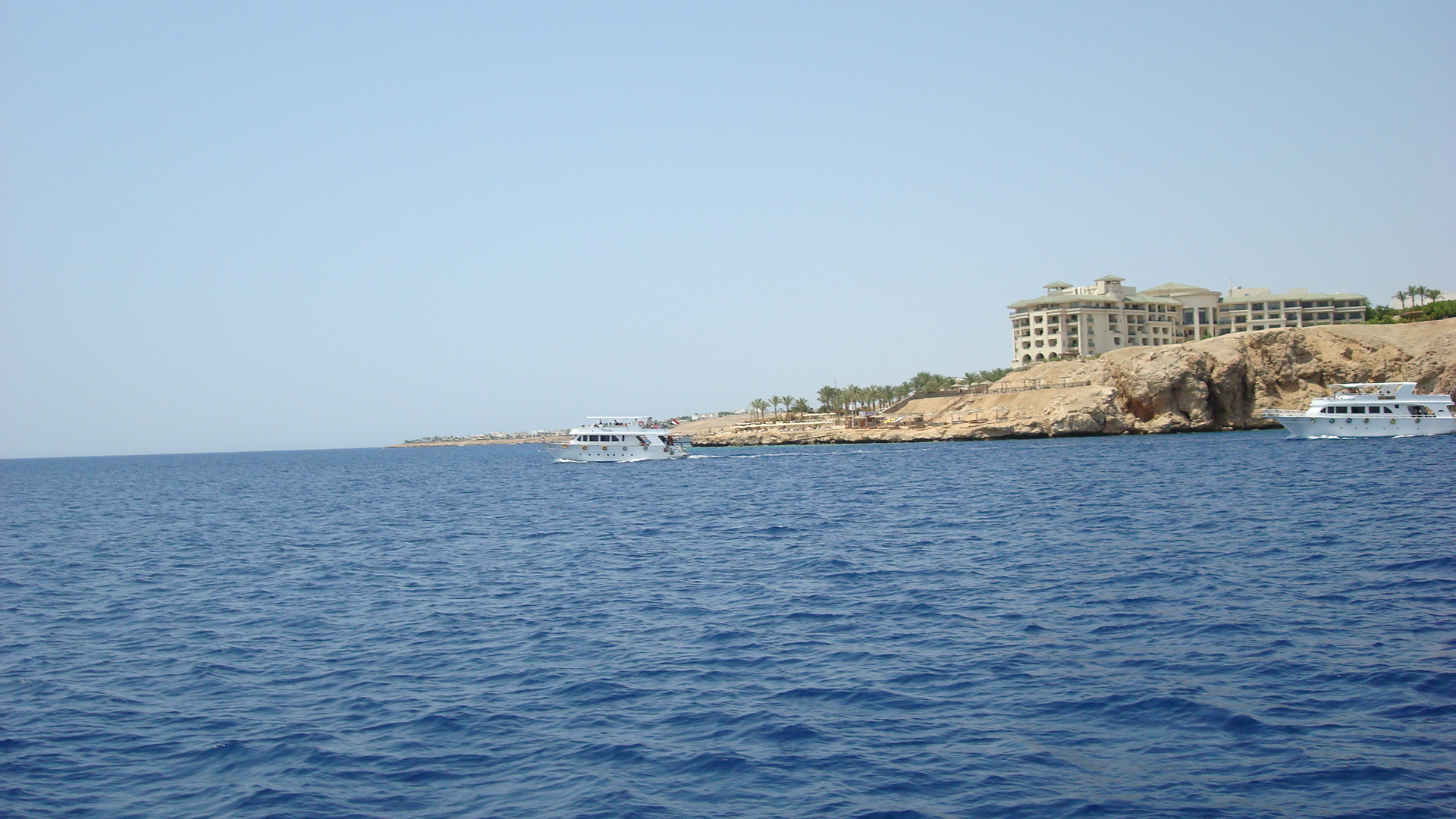
After waiting for about an hour in the extreme heat (it was at least 105 degrees F) and feeling unsure of what to expect, our guide corralled us through the security checkpoint and onto the boat. As we were boarding, I mentioned to Raj that this was definitely not the party boat. We were one of two western couples, the rest being Arab families FULLY clothed. All of the women and children went onto the upper level and we chose to lay out on the sun deck in the bow. We cruised out of the bay and up the shoreline for about an hour until we arrived at our first of two snorkeling sites. Our guide informed us that we would be ‘drift snorkeling,’ essentially just following his lead. The first site was on a coral reef that holds the remains of a huge ship (see below). There were about forty people on board, but only seven of us (Raj and myself included) got into the water (six men and me, the one infidel in the bikini–talk about making you feel awkward). Of the seven snorkelers, two of the men held onto an inner tube that the guide was pulling. The reef was beautiful, but there wasn’t as much sea life as I expected.

Shipwreck, our first stop snorkeling stop

We spent about thirty minutes in the water and then headed to our next site for lunch. We were served a typical Egyptian meal of tahini, rice, pita, fish, and falafel and were told we could swim a bit more before heading off to our last stop. We spent far too long waiting around after lunch and eventually made it to our final snorkeling stop and spent thirty more minutes in the water. This spot was the same. It was beautiful, but not teaming with sea life.

After an entire day on the water, we were exhausted (from doing little more than laying out and swimming). We were dropped back off at the hotel, ate dinner and crashed in anticipation of our next day’s adventures to the monastery of St. Catherine’s.

Honing Our Sense of Direction at the Roman Forum and Theater


We’ve been taking day trips outside of Amman for the past few weeks, neglecting the incredible sights that are just miles from our house. After seeing the Temple of Hercules in the distance from dinner last week at Souk Jara (the temple in Amman, not to be confused with the one we saw a couple of weeks ago in Jerash), I wanted to see the Citadel, where the temple lies. Raj and I were feeling adventurous and decided we’d drive ourselves. Have I mentioned that  we don’t have a GPS (yet), street names are a relatively new phenomenon here, and people give directions using landmarks?

Roman Forum & Theater

We managed to make our way towards the Roman forum, driving through a lovely part of town that looked as though people had been evicted and their belongings were thrown into the street. This was not eviction day, just a flea market. If you need scrap metal or broken appliances, this is the place to go. We eventually spotted the theater in the distance and could easily have missed it because there weren’t any signs for it and  it’s undergoing a massive renovation hiding the complex behind barricades. We made our way to the theater, which was built between 169-177 AD, during Marcus Aurelius’ reign. It  was built to seat 6,000 and as you can see from the pictures, the stairs are extremely steep. We walked to the top above the seating to check out a small, empty shrine with niches. The dedication isn’t known, but part of a statue of Athena was found during excavations.

We stayed here about an hour, enjoying the views and looking off into the distance at the Temple of Hercules on the opposite hill. This is where I wanted to go next, Jebel al-Qal’a (Citadel Hill). On our way out of the theater, we quickly looked at the forum, but most of it was behind the gates of construction, so our access was severely limited.

We hopped back in the car, unsure of how to get to Jebel al-Qal’a, but how hard could it be to go directly across the hill, probably less than one mile away? Apparently it is VERY difficult because we ended up getting lost, for an hour,  with only our limited sense of direction to get us back home. We made it home frazzled and decided that we’ll take a cab to Jebel al-Qal’a in a couple of weeks.

This slideshow requires JavaScript.

Diet Secret of the Middle East Revealed


Raj’s Arabic class went on a field trip today and I tagged along. We met in Swéfiéh, about a five-minute drive from our house (if we didn’t get lost). According to Wikipedia, this area is  “…notorious for its night-life and shopping culture…” And even more interesting, “It is estimated that Swéfiéh has more Strip clubs, Gentlemen’s Clubs, Sex Shops, Bars, Nightclubs and Adult Entertainment Venues than the rest of the city combined, making Swéfiéh an unofficial red-light district among the residents.” In the Middle East? Did Raj know this?

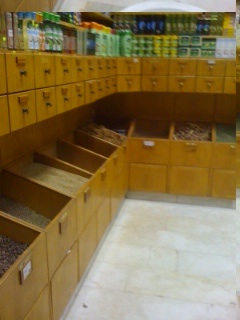
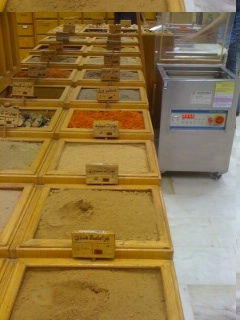
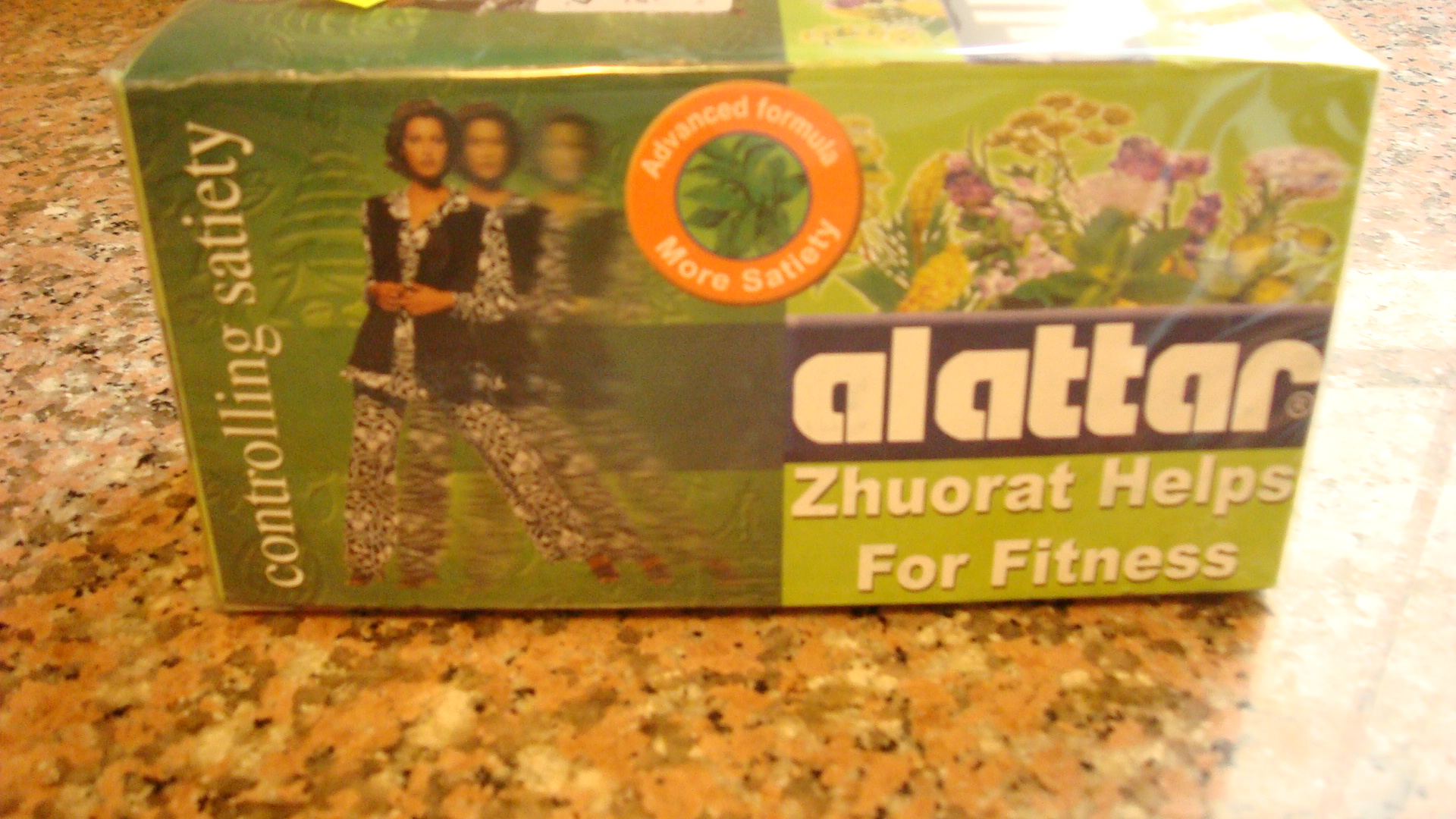
Back to the ‘G’ rated field trip…We met outside of a bakery and our first stop on the tour was into a spice store. Raj’s teacher showed us around, pointing out different spices, letting us taste and smell things, some were familiar to me, others were not. There was a tea section in the rear of the store that held all sorts of Middle Eastern homeopathic remedies. This is where things got interesting. There were herbs and concoctions for kidney problems, weight issues, anxiety, any ailment you’ve got, they have something for you to steep in hot water. My favorite was the ‘natural glue.’ It looked like rock candy, all crystalline in structure and in many different colors. You steep it, like everything else here and drink it–but DON’T eat it (it looks like what I’d imagine crack looks like). We had a few minutes to shop and guess where we headed? Back to the tea section. We picked up the miracle tea to “control satiety,” otherwise known as “Fitness Tea.” I’ll let you know how much weight I’ve lost next week.

Next stop, a deli. We congregated in the front of the store by the preserves. There were all sorts of interesting looking preserves, whole fruits, vegetable medleys, and syrup. The writing was all in Arabic, but the teacher told us what each one was and how it’s used. She said that these were all “hand-made” in Syria, known for very sweet fruits and the best preserves in the region.We picked up some pomegranate syrup to splash in our vodka tonics.

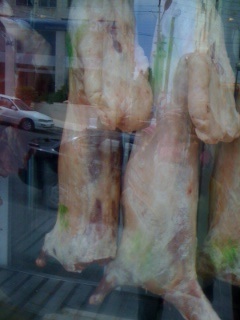
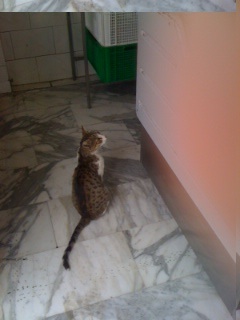
Next door to the deli was the butcher. I’m not squeamish, but I prefer to go to the butcher only when it’s absolutely necessary. I avoid butchered body parts and blood and prefer my meat clean and sanitarily prepared (how I miss Whole Foods). I saw the hanging carcasses in the window, checked out the chicken parts, and then headed out to wait for the group. As you can see, felines are welcome into the store. What’s wrong with cats roaming through the butcher shop?

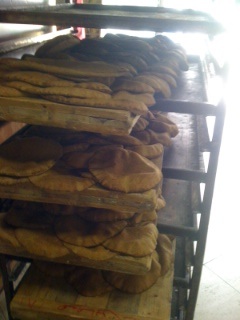
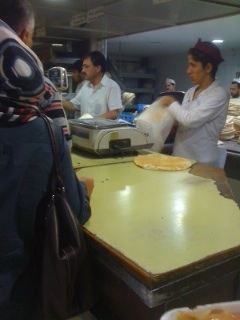
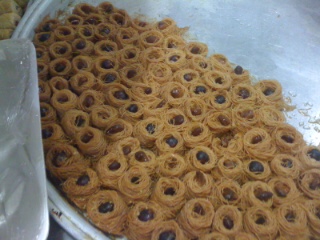
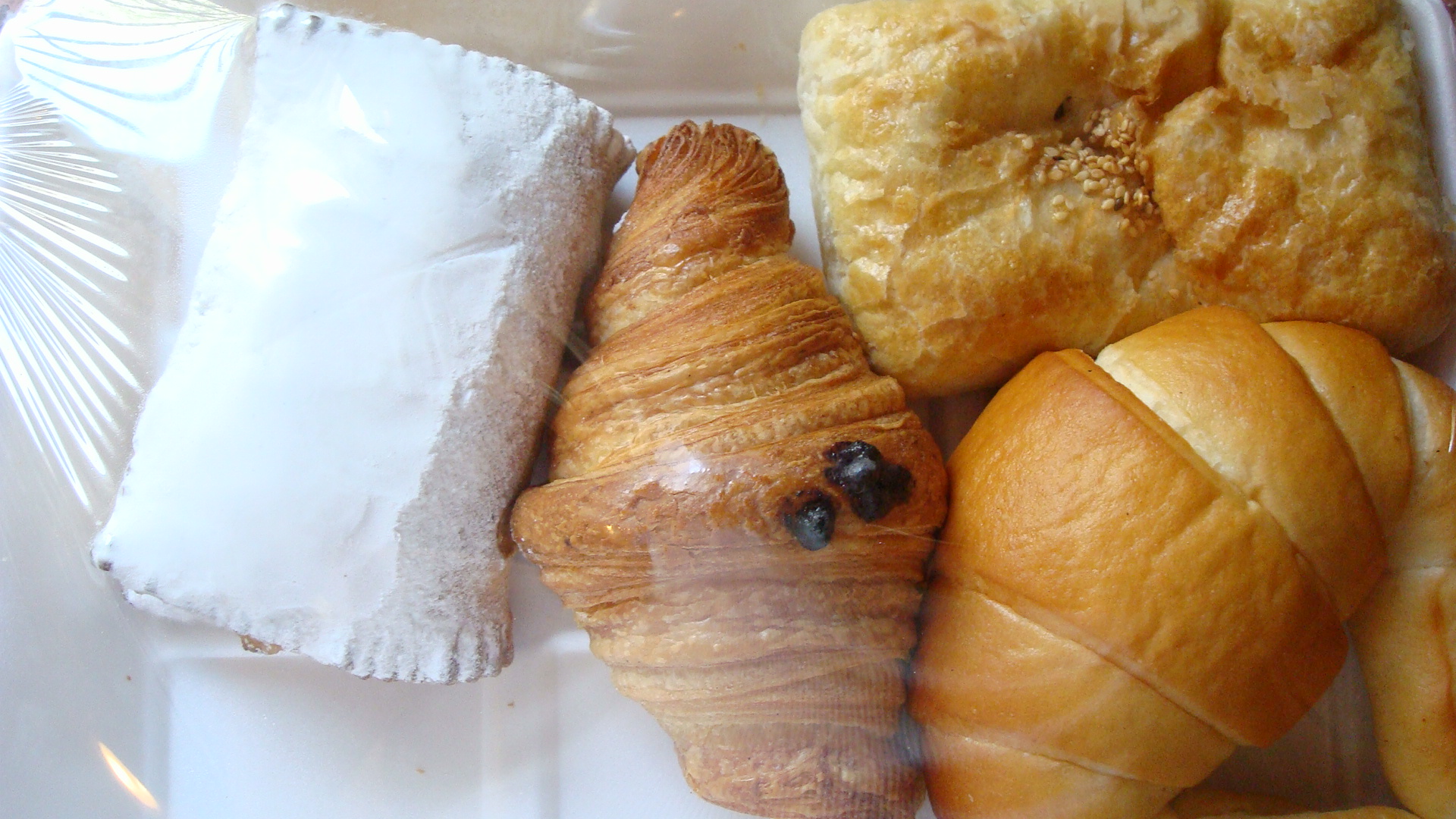
Last stop, the bakery. The intoxicating smell of sugar and yeast had been wafting through the air since the moment we stepped out of the car. The bakery was overwhelming with an amazing array of sweets, chocolates, breads, pizzas (not pizzas, but something that looks like them), pita, croissants, bread sticks, everything you can imagine. We bought a selection of desserts to try along with a small selection of chocolate croissants and other extremely healthy snacks.

Best of all, now that we’ve got the fitness tea, we can eat all of the sweets we want and not worry about a thing. Let me know if you want me to send any your way.

Here’s our loot. The best deal was at the bakery–about $5 JDs for all of the fat-free treats; the syrup was $4 and the tea was $5.

Movie Star Spotted in Madaba!


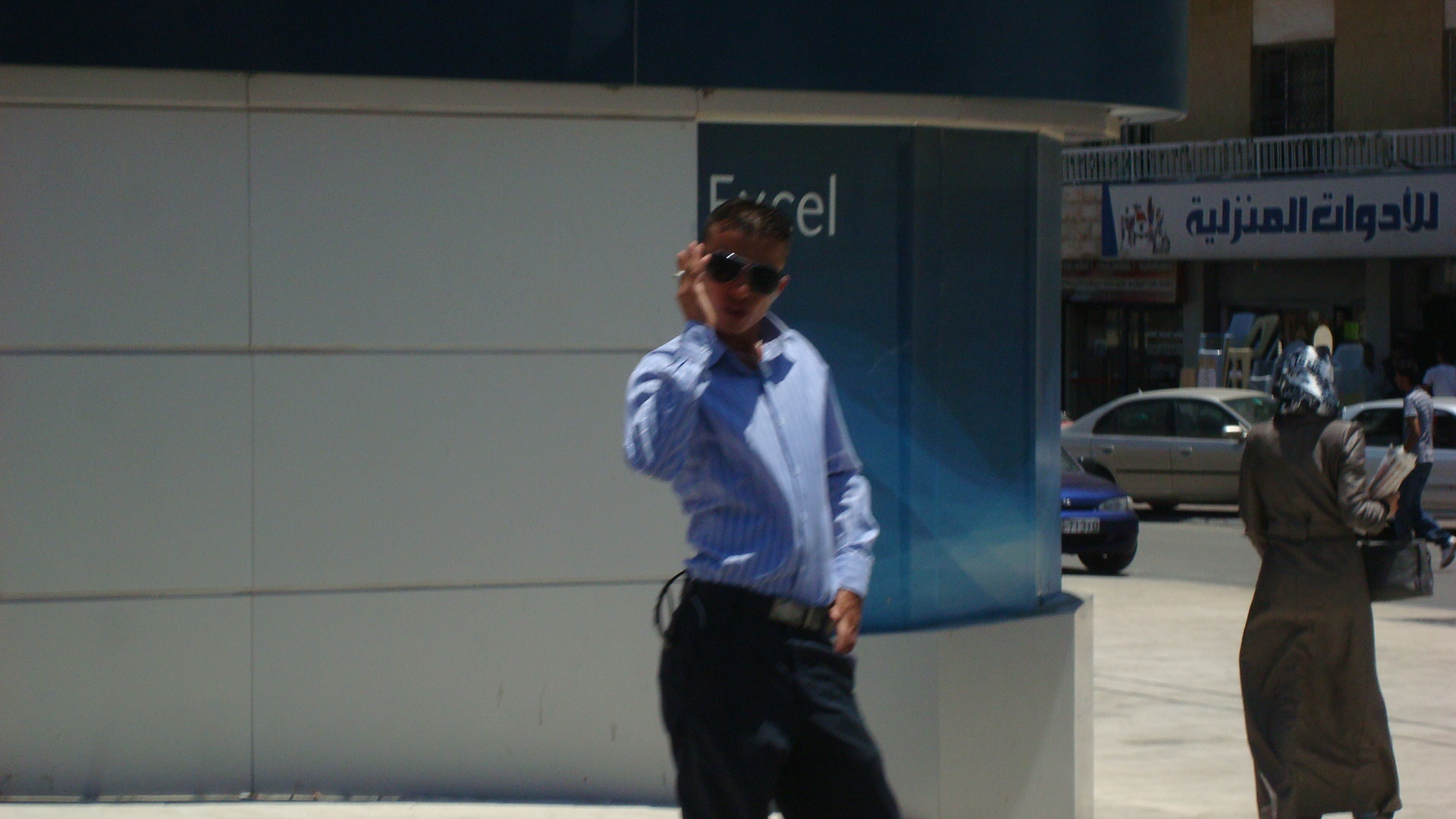
Local Movie Star Spotted in Madaba!

Who’s the Hottie?

I’m not sure who this guy is, but come on. How can he NOT be famous! Look at the pose, the glasses, the stance, smoking a cigarette, edging his sunglasses ever so slightly down his nose to check us out (in a school bus, yikes) as we drive by en route to St. George’s. Although his sighting was not the reason for the trip, it was certainly a contender for second place. Did I mention that he weighs about 100 pounds?

Background Information on the Town of Madaba

We booked a trip to Madaba, about 30 km (you do the math) southwest of Amman to see Mt. Nebo and St. George’s church. Madaba is be known for the dozens of Byzantine mosaics preserved in churches and museums. Madaba was first mentioned in the Old Testament as having been conquered by the Israelites and parcelled to the tribe of Reuben. The city was won back by King Mesha, at which point the Israelite prophet Isaiah stepped in, prophesying doom: “Moab shall howl over Nebo and over Medeba: on all their heads shall be baldness and every beard cut off…everyone shall howl, weeping abundantly.” (I’ll let you know if this is still true.) After further turmoil, Madaba passed from Greek hands to Jewish, to the Nabatean’s, and by the 3rd century AD, Madaba was minting coins of their own.

Madaba was abandoned and in ruins for centuries. In 1879, conflict between Christian and Muslim tribes in Karnak led to ninety Catholic and Orthodox families going into voluntary exile here and they laid claim to the surrounding land and began to farm. In 1884, during clearance work for a new church, the map of the Holy land in St. George’s was discovered, followed by many more mosaics across the area. Christians still comprise the vast majority of inhabitants in the area ( estimates claim over 95% are Christian).

Mount Nebo

Mount Nebo is about ten minutes outside of the town of Madaba up a gradually sloping hill.  It is said that this is the place that Moses finally saw the Holy Land that God had forbidden him to enter after spending forty years leading the Israelites through the wilderness. After Moses died on the mountain, his successor Joshua went on to lead the Israelites across the river into Canaan. According to the Christian and Jewish tradition, Moses is said to be buried someone up here, but no one, except the shepherd who God spoke to, knows where. Muslims believe that the body of Moses was carried across the river and placed in a tomb.

The Moses Memorial Church is undergoing construction at the moment, but it’s set to open up sometime next year. The first structure of the church may have dated from classical times, but by 394 AD it was converted into a triapsidal church floored with mosaics. It expanded during the sixth century and was the focus for a large and flourishing monastic community that was thriving in 1217, but by 1564, it was abandoned. In 1933, the ruined site was purchased by Franciscans who began restoring and excavating the church and the surrounding area. Today this remains a monastic refuge and the headquarters of the Franciscan Archeological Institute.

The Franciscan brother who led our tour felt badly that we couldn’t view the church due to the construction project, so he led us into the Brother’s private courtyard and living quarters, below the church site, giving us a rare glimpse into their small monastery. We were welcomed into a beautiful, terraced garden area with amazing views and we were invited to peek into their private chapel, complete with many tiny mosaics.

(No Bargain) SHOPPING!

We left Mt. Nebo, heading back towards the town of Madaba, with one stop for shopping. We were welcomed in to a small mosaic workshop where some of the artisans demonstrated  (of course in anticipation that we would buy lots of stuff) the techniques. The pieces were beautiful, but pricey ($2,000 JD’s for table tops). I bought a four serving pieces (see picture)–no deals, but I love them and Raj got to work his haggling magic (he didn’t feel he had haggled enough).  I told him I was very proud!

St. George’s (The Church of the Map)

This is Madaba’s main attraction. The map is estimated to have been laid in the second half of the sixth century. What makes the map unique is that it depicts the larger towns and cities with an oblique perspective, as if from a vantage point above to the west. In addition to glorifying God’s work in the lands of the Bible, it is said to have been used to better direct pilgrims to sites of biblical significance. The church was small and full of modern mosaics. The floor map was fragments, but interesting, nonetheless.

This slideshow requires JavaScript.

Souk Jara on Rainbow Street, West Amman


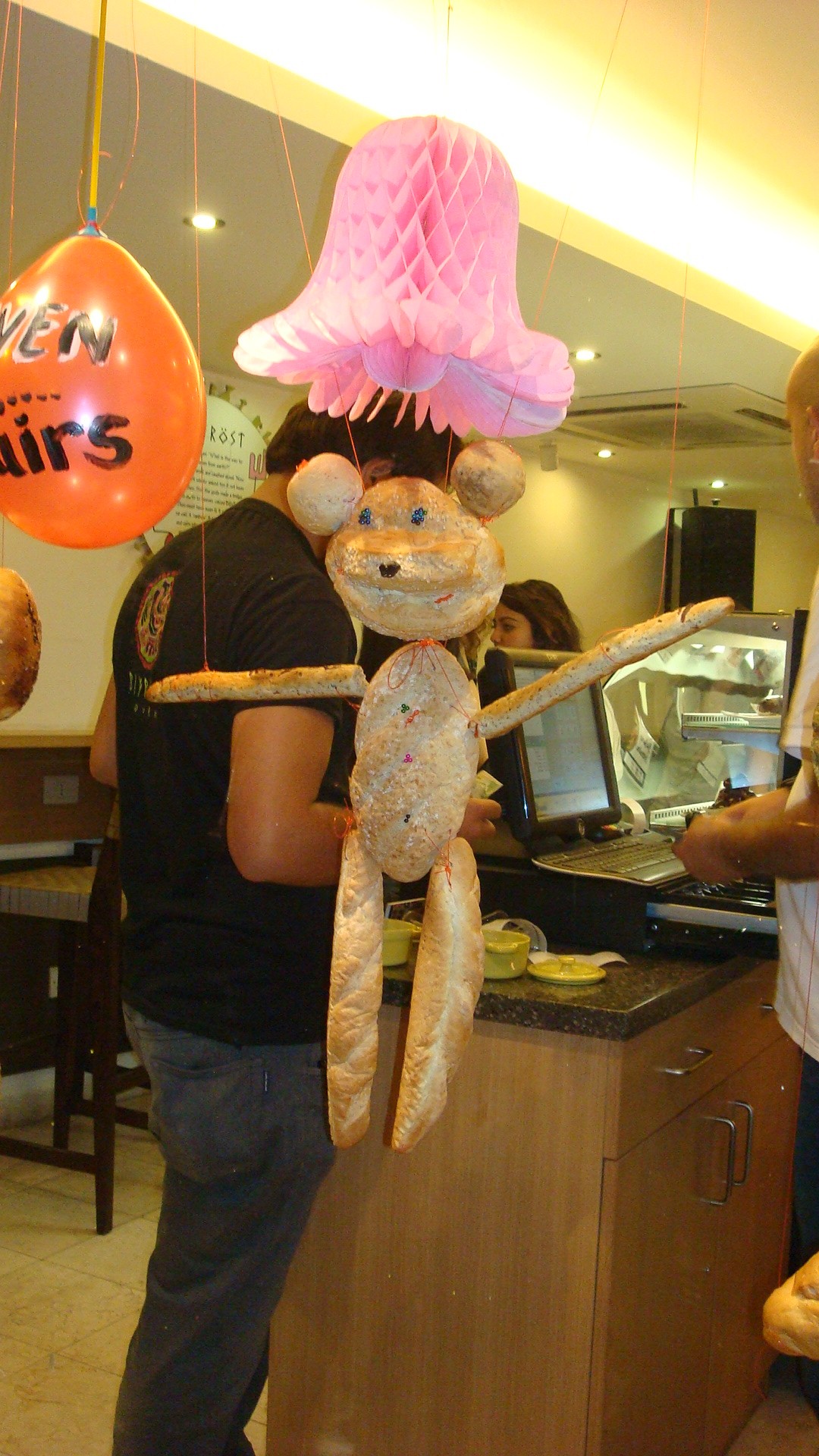
Monkey? Mouse? I don’t know. Either way, this adorable, edible creation made of bread was calling to Raj like a siren to a sailor to tempting him with her treats as we walked along the street en route to Souk Jara. Raj stayed strong and was rewarded with dessert later in the evening.

We ventured into Wast Amman on Friday evening, down Rainbow Street (named after the Rainbow Cinema), to Souk Jara, a summertime outdoor market. This area of Amman is home to most of the city’s upscale hotels, restaurants, and nightlife. We walked down Rainbow Street to the souk’s entrance, walking through a narrow corridor of vendors selling everything from homemade soaps, honey, clothing, hand crafted jewelry, baskets, food, and much more. It was crowded and hot and after walking through the souk empty-handed, we were in serious need of food (lest we forget, someone gets hangry and that’s dangerous!).

I had read about a cafe in the area that was highly rated called Wild Jordan, part of the Wild Jordan Center, housed in a chic, steel building. Inside, the center provides information on Jordan’s nature reserves, there’s a nature shop (gift shop with fabulous hand crafted jewelry, handbags, herbal teas and herbs all produced on the reserves), exhibitions, and of course the cafe, known for organic food, drinks, and smoothies (no alcohol, though). The cafe is small; it sits on a balcony that seats only about fifty people, but it offers one of the most spectacular views, looking over the valleys of Downtown and across the way to Roman ruins in the distance. As the sun was setting, the view of the ruins and the emerald-green minarets was magical. The food was good, not exceptional, but well worth the price for the views alone.

We headed back up Rainbow Street at about 10PM in search of a taxi to head home. The street was so crowded that it was difficult to stay together. Everyone and their grandmother were out and about drumming in a drum circle, sitting in cafes eating and smoking shisha, licking ice cream, or just hanging out on street corners. Despite the hordes, it wasn’t sketchy, maybe a little ripe, but not scary. We walked about a mile up towards the hotels and eventually got a cab a made it home to sip on couple glasses of Jordanian wine.

This slideshow requires JavaScript.

Striking a Pose in Jerash


The Lonely Yogi doing Yoga Graffiti

We ventured out to Jerash on Friday. It’s one of the best-preserved Roman cities in the eastern Mediterranean. It was founded around 170 BC, focused around the Temple of Zeus. Jerash (or Gerasa, the ancient name for Jerash) briefly became the center of the Roman Empire in 129-130, as Hadrian wintered in the city. In his honor, the Gerasenes built a monumental arch on the southern walls.

The place is amazing and it’s very explorable. We watched the Roman Army and Chariots Experience reenactment show. I’m not much for reenactments or “interpreters,” but the chariot racing was kind of cool to see, especially in the Hippodrome.

In addition to seeing the sights, another high point of the day was haggling amongst the ruins for earrings by a young Bedouin salesman (about 10 years old) . I noticed some beautiful turquoise earrings that I fancied. I asked how much for the earrings and the next thing I knew, the earrings,  a matching necklace, and a chunky silver Bedouin bracelet appeared on my body. The young salesman held a mirror out for me to gaze at the splendor staring back at me while he offered me fabulous deals, solely because I was “such a nice lady” (in perfect English I might add). I only wanted the earrings, but they were $10 JOD and too much for Raj. After much bargaining, the young salesman wouldn’t budge. He really wanted to sell the ensemble, not the piddly earrings. Raj walked away and I followed, despairingly. Two minutes later, the salesman followed us down the path and offered to sell them for $7. Raj said, “No, $5.” To which the salesman responded, “7 is only 2 more than $5.” We got the earrings for $5. I felt guilty (poor kid). Raj felt triumphant.  I got over it.

After walking around the ruins for a couple of hours, we headed west out of Jerash to Ajloun castle, a former isolated Christian monastery home to a monk named Ajloun. By 1184, in the midst of the Crusades, the monastery had fallen into ruin, and an Arab general took the opportunity to build a fortress on the ruins.

This place was interesting to see, but someone who shall not be named was getting ‘hangry’ (hungry/angry) so we had to speed up the tour so that we could get back to Amman to get some food into someone’s belly.

This slideshow requires JavaScript.

The Dead Sea


We just got back from two nights at the Dead Sea, the lowest point on Earth. The resort was amazing and the sea was mesmerizing. It was 105 degrees or so, but at least it was dry heat, and not a dry resort (plenty of alcohol).

This would be the PERFECT location for a yoga retreat with the amenities and spa selections available…

This slideshow requires JavaScript.